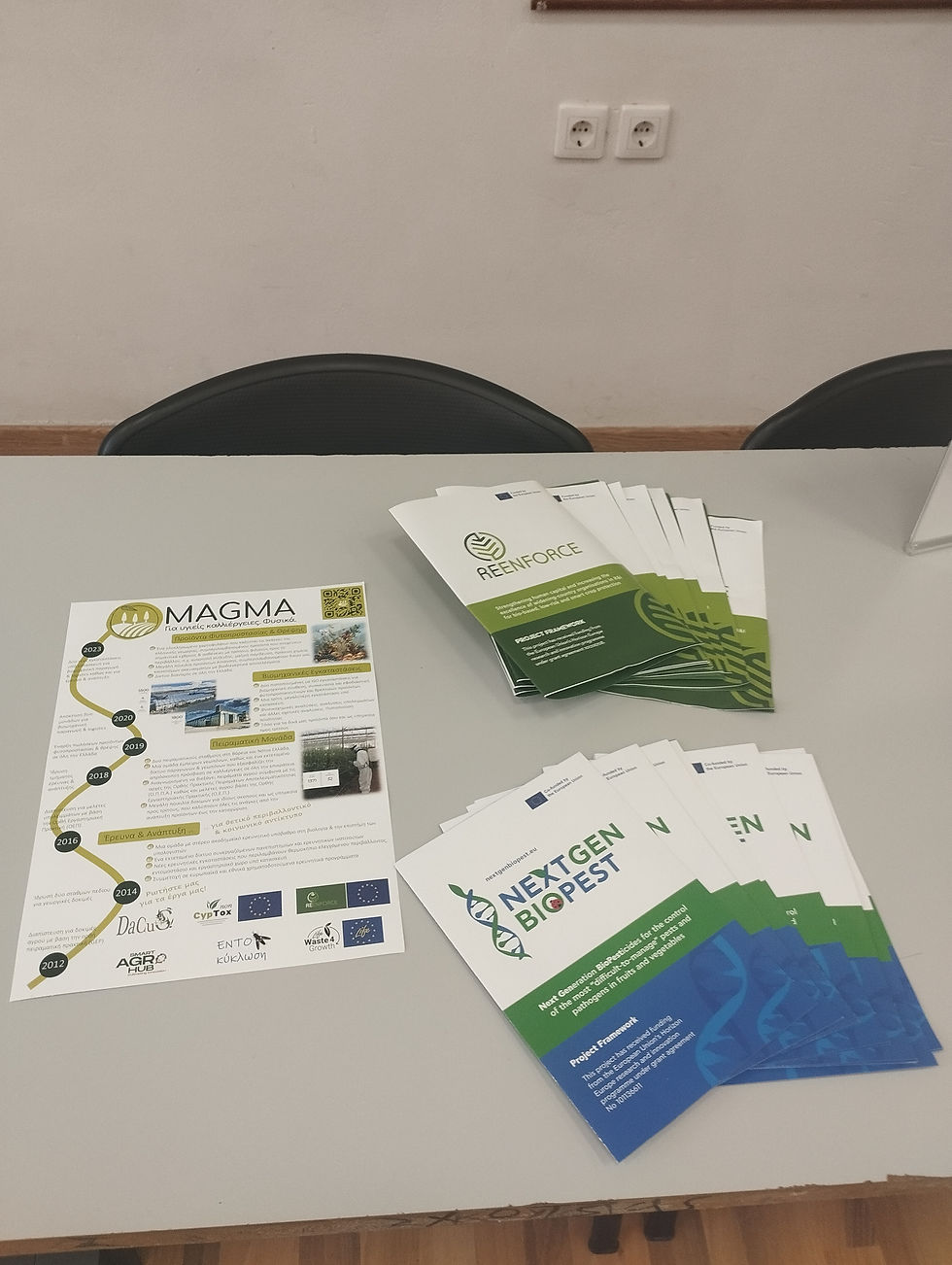
NextGenBioPest at the Technical Professions High School of Moires!
On May 26th, 2026, the Agricultural Cooperative of Tympaki took NextGenBioPest into the classroom, presenting the project to students at the Technical Professions High School of Moires in southern Crete — bringing cutting-edge European research on sustainable pest management directly to the next generation of agricultural professionals.
The visit offered students a unique opportunity to discover how science and innovation are actively reshaping the way we approach crop protection. Through the lens of NextGenBioPest, young learners were introduced to the principles and tools underpinning next-generation biopesticide research — from biological control agents and green pesticides to Integrated Pest Management (IPM) strategies — and to the broader European effort to reduce dependency on conventional chemical pesticides in agriculture.
For students enrolled in technical and vocational agricultural programs, encounters like this one carry particular value. They bridge the gap between classroom theory and real-world research, demonstrating that the sustainable agriculture of tomorrow is not an abstract concept, but a living, evolving field — one they themselves may one day contribute to.
The Agricultural Cooperative of Tympaki's initiative reflects the project's strong commitment to science outreach and community engagement, ensuring that NextGenBioPest's work extends well beyond the laboratory and reaches the farmers, students, and local communities of the regions where it matters most. Southern Crete, with its deep-rooted agricultural traditions and dynamic farming sector, is a natural home for this kind of grassroots science communication.
NextGenBioPest is proud to support these efforts and looks forward to continuing to inspire young people across Europe with the possibilities that sustainable, research-driven agriculture has to offer.