NextGenBioPest at Instituto de Educación Secundaria “Duques de Nájera”!
- Apr 7, 2025
- 1 min read
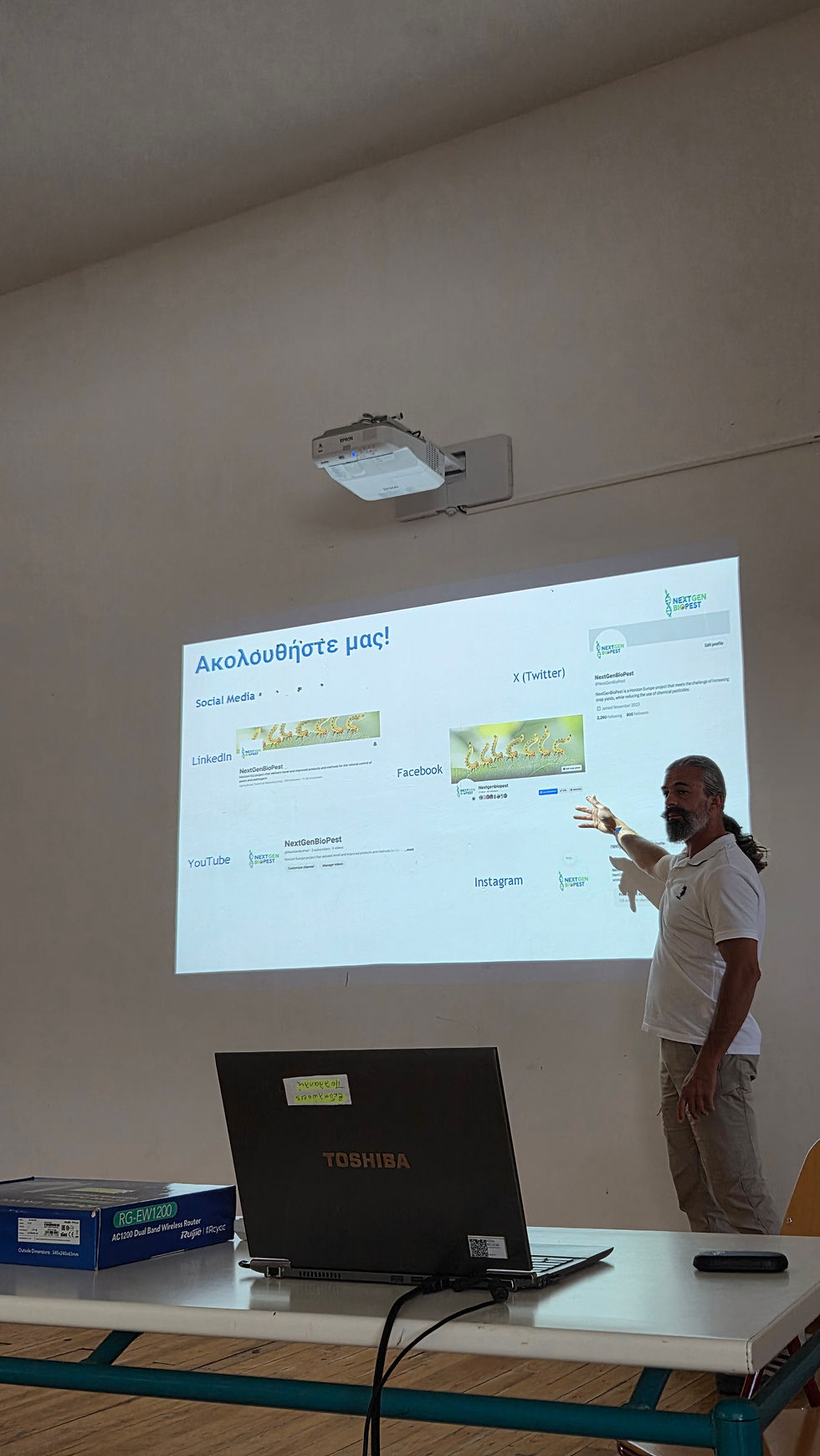
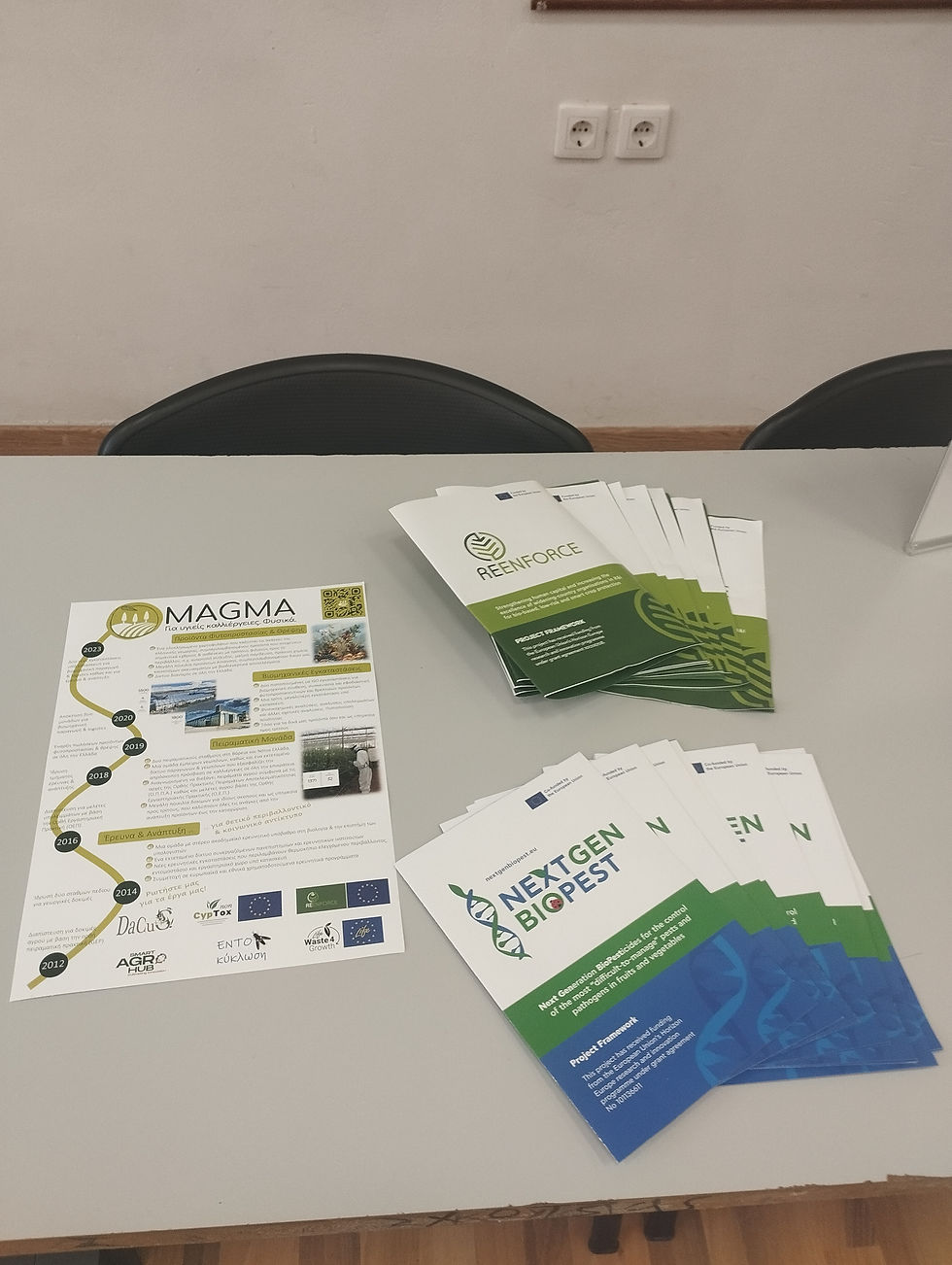
As part of its outreach and dissemination activities, the University of La Rioja (UR) visited students of 1º de Bachillerato at the Instituto de Educación Secundaria “Duques de Nájera” on April 4th, 2025, to introduce them to the NextGenBioPest project and the importance of sustainable crop protection.
The visit aimed to bring science closer to young students and highlight how research and innovation contribute to solving real-world challenges in agriculture and environmental protection.
Explaining Sustainable Pest Management
During the session, researchers explained the core objectives of NextGenBioPest, focusing on:
The development of environmentally friendly biopesticides
The role of biological control in reducing chemical pesticide use
How genomic research and innovative technologies support sustainable agriculture
The importance of protecting biodiversity while ensuring food security
The presentation was tailored to the students’ level, using accessible examples to demonstrate how pests affect crops and how science can provide sustainable solutions.
Encouraging Future Scientists
Beyond presenting the project, the visit aimed to inspire curiosity and interest in scientific careers. Students engaged actively with questions about biotechnology, agriculture, and environmental sustainability, showing strong interest in how research projects like NextGenBioPest contribute to a greener future.
By engaging with secondary school students, the University of La Rioja reinforces NextGenBioPest’s commitment to science communication, education, and societal impact. Outreach activities such as this help ensure that the next generation understands both the challenges and the opportunities in building more sustainable and resilient agricultural systems.